The Taxi Driver of Life
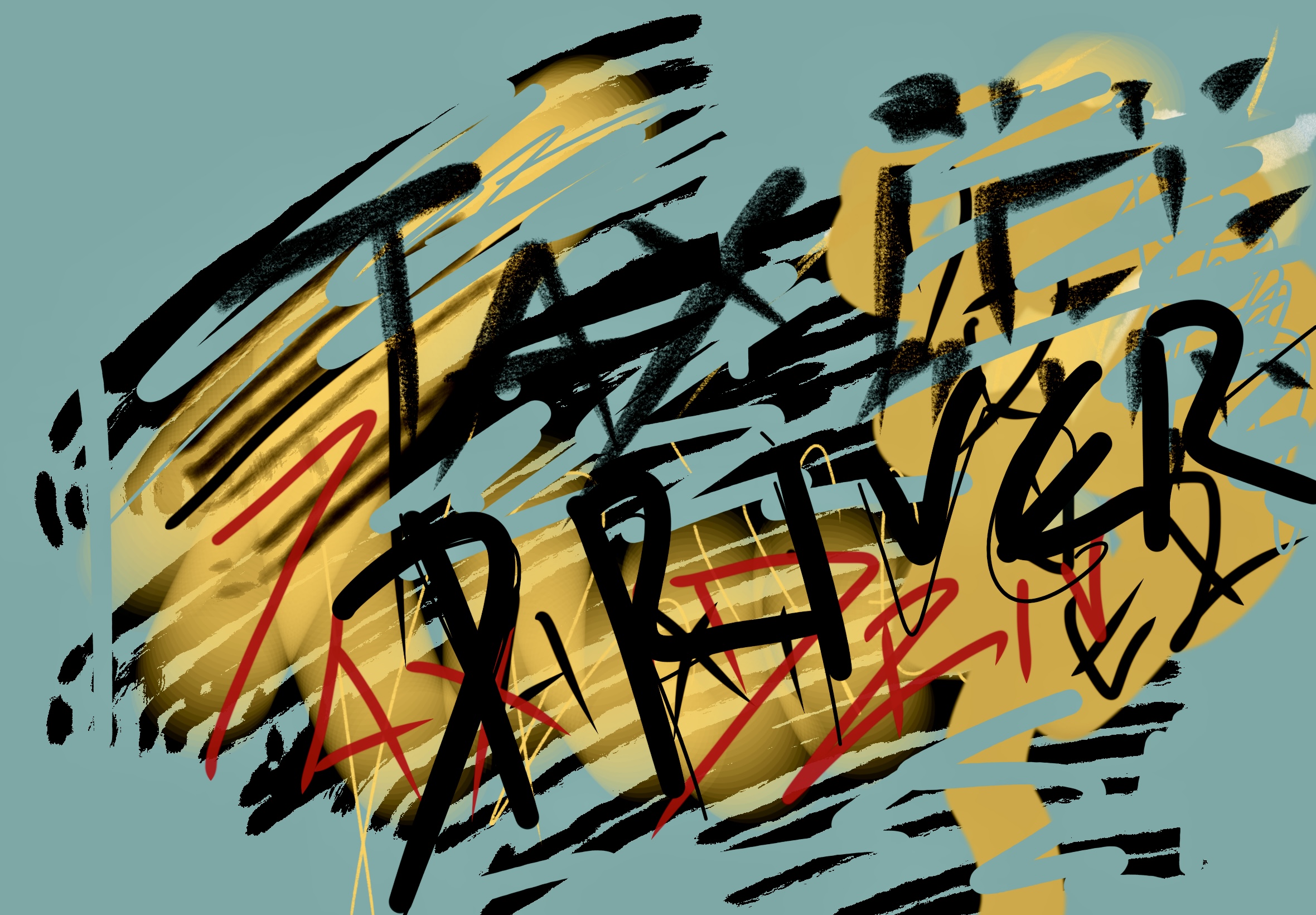
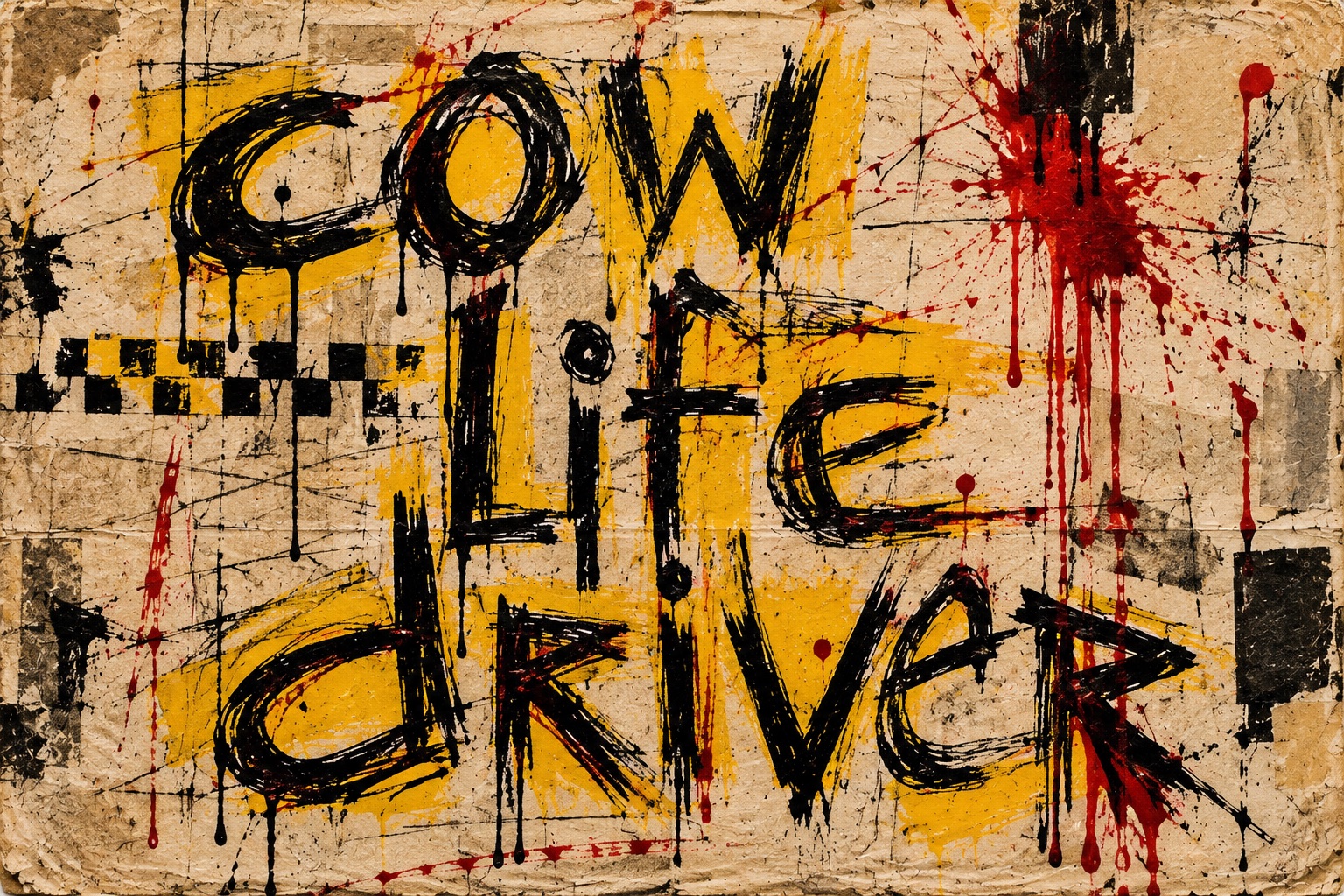
The two supplied images are presented together as related visual expressions of the work. Their original compositions have been preserved.
1. Introduction and Conceptual Framework
The Taxi Driver of Life can be approached as a visual metaphor for the individual’s passage through the structures and contingencies of everyday existence. The figure of the taxi driver is not treated merely as a literal occupational reference; it becomes an interpretive device through which questions of direction, control, destination and time are brought into view. A taxi operates within a network of streets, signals, requests and unpredictable encounters. In a comparable way, human experience unfolds through routes that are partly chosen and partly imposed by circumstances beyond individual control.
The title establishes a productive tension between the ordinary and the existential. The taxi driver is at once a worker, navigator, observer and temporary companion to other people’s journeys. Read symbolically, this position evokes the condition of moving through life while negotiating external demands, personal intentions and the uncertainty of arrival.
2. Formal and Compositional Analysis
Both images are organised through dense accumulations of marks rather than through a stable, centrally ordered representation. Broad directional strokes, abrupt diagonals, overlapping linear gestures and irregular areas of colour create a sense of continuous motion. The eye is repeatedly redirected across the surface; no single route dominates for long. This unsettled visual progression is significant in relation to the work’s theme: the image behaves like a journey whose course is repeatedly interrupted, revised or diverted.
The first composition sets a muted turquoise field against energetic ochre-yellow passages and forceful black gestures. The cool ground provides a perceptual interval, while the yellow forms suggest acceleration, glare or the visual intensity of a city in motion. Black marks function as both structural anchors and interruptions. Red linear accents cut through the other layers, introducing a further register of urgency and friction.
The second composition develops a more tactile, archival atmosphere. Its parchment-like ground, distressed surface, repeated marks and emphatic black lettering evoke a wall, noticeboard or urban palimpsest that has accumulated signs over time. Yellow passages create a field of visual heat, while red drips and splashes disrupt the apparent order of the written forms. The composition oscillates between legibility and illegibility, between message and noise.
3. Gesture, Line and the Trace of Movement
Gesture is central to the work’s visual language. The marks vary in scale, pressure and apparent speed: some are broad and sweeping, others thin, abrupt or tightly looped. Their overlap records successive acts of inscription. Rather than concealing the process of making, the surface foregrounds accumulation and revision. The image therefore carries a temporal dimension: it can be read as a record of decisions, impulses and corrections made visible.
The repeated directional strokes may recall roads, trajectories, traffic flows or routes on a map, although they do not settle into a literal cartographic system. Their function is less descriptive than kinetic. They produce the sensation of movement without specifying a final destination.
4. Colour, Contrast and Visual Atmosphere
The palette is built around strong contrasts. Turquoise and ochre establish a relationship between cool distance and warm intensity in the first image. In the second, yellow, black, red and the aged beige ground generate a more abrasive, urban atmosphere. Black provides visual weight and establishes temporary points of fixation; red operates as an accent of interruption, pressure and heightened attention. Yellow expands across the surface as a field of energy, while the neutral ground in the second image introduces associations with wear, time and material memory.
These colour relationships do not function as a fixed symbolic code. Their meaning emerges through contrast, placement and repetition. The emotional charge of the palette is therefore produced by the interaction of colours and marks rather than by isolated colour symbolism.
5. Text, Signage and the Urban Palimpsest
The appearance of lettering and letter-like forms is especially important. In the second image, written signs appear partly legible and partly absorbed into the painterly field. Language is simultaneously image, information and texture. This instability reflects the experience of the city, where signs compete for attention and where meaning is often encountered in fragments: a word glimpsed from a moving vehicle, a direction read too late, a message obscured by another message.
The visual treatment of text also complicates the distinction between communication and noise. The viewer is invited to search for meaning, but the composition resists complete decoding. This resistance can be understood as an analogue for the uncertainty of navigation itself: one may recognise signs without possessing full knowledge of the route.
6. The Taxi Driver as an Existential Figure
As a metaphor, the taxi driver occupies an ambiguous position between agency and service. The driver controls the vehicle, yet the destination may be chosen by someone else; the route is shaped by traffic, time, road conditions and external instructions. This contradiction offers a compelling framework for thinking about human autonomy. To what extent do individuals determine the direction of their lives, and to what extent do they respond to routes laid out by social expectations, economic necessity and chance?
The work does not need to resolve this question. Its layered visual structure sustains the tension between movement and obstruction, intention and contingency. The taxi driver becomes a figure for the person who continues to navigate even when the destination is unclear. The journey itself, with its detours and interruptions, becomes the primary condition of experience.
7. Viewer Experience and Interpretive Openness
The density of the compositions encourages an active form of looking. The viewer moves between large colour fields, gestural marks and fragments that resemble writing or signs. Recognition is repeatedly offered and withdrawn. This process creates a visual equivalent of urban attention, in which the observer must continually select, interpret and reorient within an environment of competing stimuli.
Any association with a particular city, route or personal biography remains open unless established by the artist. The work’s interpretive strength lies in its capacity to connect a recognisable everyday figure with broader questions of time, labour, freedom and uncertainty.
8. Conclusion
The Taxi Driver of Life transforms an everyday urban role into a broader meditation on the experience of navigating existence. Through gestural accumulation, unstable lettering, chromatic contrast and a deliberately unsettled visual rhythm, the work evokes a world in which direction is continually negotiated rather than securely possessed. The two images offer complementary emphases: one foregrounds kinetic abstraction and the collision of colour and gesture; the other intensifies the relationship between text, surface and the traces of time.
The resulting visual field remains open, energetic and unresolved. Its central metaphor is not simply that life is a journey, but that the act of navigating is itself a complex negotiation between choice, circumstance and movement.
Artwork Record
Artist: DEMA — Vasiliki Dimitra Kailoglou. Title: The Taxi Driver of Life (Ο Ταρίφας της Ζωής). The supplied images are reproduced without compositional alteration. Year, physical medium and dimensions have not been stated and should be confirmed by the artist before formal catalogue or exhibition submission.